The Healthy Dancer
What does it mean to be healthy? Can I look healthy but not ‘be’ healthy? What is a healthy lifestyle?
In an age promising miracle cures and four week transformations, it can be incredibly difficult to decipher fact from fiction.
This World Health Day, we'll be answering your questions, exploring what it means to be a healthy dancer and how PBT is providing dancers with the tools and knowledge needed to sustain long and healthy careers.
What is Health?

According to WHO, health is a state of physical, mental and social well-being, not merely the absence of disease or infirmity. This description of health addresses a common and quite often dangerous misconception: health is more than just one’s appearance, diet or state of mind, but the collective, the result of all three existing in their optimal condition.
The Four Pillars of Health
Sleep, Nutrition, Exercise and Stress Management are generally seen as the four elements fundamental to both short-term and long-term health. These four elements work symbiotically to nurture both physical and mental well-being. If we break it down, the relationship between these four elements becomes indisputable. Better sleep means an improved capacity for both exercise and stress management as sleep supports hormone regulation. The recovery process undergone during sleep is further enhanced by food consumption which itself provides the energy needed to sustain exercise. It is therefore not enough to just eat well or just exercise frequently, all four aspects need to be addressed to ensure optimal health.
Measuring Health
There are 6 key metrics a person can use to monitor their physical health:
- Blood sugar,
- LDL cholesterol levels,
- Blood pressure,
- RHR (resting heart rate),
- BMI (body mass index) and
- VO2 max.
Whilst historically these measurements were only taken as part of a medical assessment, in recent years, fitness tech companies have capitalised on public curiosity, adding heart rate monitors, step counters, and sleep trackers to their devices. Formerly for performance athletes, these devices can now be used by anyone and everyone provided they have the money and know-how to acquire one. Although the truism 'knowledge is power' stands, we should not forget that a measurement device is only as good as the person reading the data. Fitness lovers should not be deterred from exercise should they lack a gadget to summarise their performance.
I am all too familiar with the limitations of fitness data and tech. At my most athletic looking in terms of muscle definition, I was on the cusp of underweight on the BMI scale, so ‘healthy’. I had lost my period and was continuing to lose hair. Additionally, I had lost both my appetite for food as much as for life, struggling with depression. However, despite all this, I could complete a 30-minute plank challenge no problem and could run a 10k following a 3 hour ballet exam without complaint. I was physically fit by performance standards alone. Indeed, I would have earned many rewarding dings had I been wearing a Fitbit at the time but I was far from healthy.
The image I had curated for friends and family was one of discipline, strength and athleticism. In truth, I was dejected, exhausted and miserable. When I was ill, I justified many ‘healthy’, unhealthy behaviours like overexercising with this data. I was ok, I was fine because the numbers said so. What these numbers failed to account for was my mental well-being.
A Spotlight on REDs
The benefits of exercise are well documented with studies showing that regular movement can provide as much as 63% protection from cardiovascular disease. In addition to combatting CVD, exercise, particularly that which involves axial loading, has also been proven to increase bone density and improve muscle mass maintenance.
However, while exercising is beneficial, in order for athletes to reap the benefits long-term, their calorie expenditure should be equivalent to their intake. Relative Energy Deficiency in sport, also known as the Female Triad, though not exclusive to females, refers to an athlete under-eating with respect to their training demands. If this behaviour continues unchecked, both the athlete's performance and health will be negatively impacted.
This is a serious concern amongst dancers both due to the extremely physically demanding nature of dance and the pressure to meet a certain aesthetic. Prior to certain roles, dancers may adopt unhealthy eating or exercise habits to look 'stage-ready'. These behaviours can often become more aggressive and lead to long-term health conditions such as eating disorders, amenorrhea and osteoporosis.
Mental Health

In the grand scheme of things, mental health is a relatively new concept. In fact, it was only after WWII that mental health was deemed a public concern with Britain establishing the National Health Service Act in 1946 prompted by an increase in mentally unwell soldiers. While there still remains a stigma surrounding mental health and a skepticism towards the validity of some conditions, it is clear that maintaining a stable and sound mind is crucial to overall well-being.
Art has long been concerned with exploring the human condition and conveying the purest and most terrifying of human emotions on stage. Yet whilst these fictional dramatic explorations are readily given space, that same grace has rarely been afforded to those on stage. Yes, dancers are encouraged to use their own lived experiences as inspiration for their performance but should they express that emotion in the studio, be it as a result of fatigue, stress, or pain, it is seldom met with the same empathy.
Many dancers I have spoken to have told me stories of hostile teaching environments in which they were made to feel uncomfortable, worthless and not good enough. Many of them today still struggle with their body image, relationship with food or self-acceptance as a result of the experiences they endured when they were younger. Put plainly, this just isn’t good enough. A dancer’s mind is as important as their body and educators should provide a nurturing, supportive and inclusive environment to ensure that dancers are given the space and freedom needed to develop as individuals and artists.
How to Be a Healthy Dancer
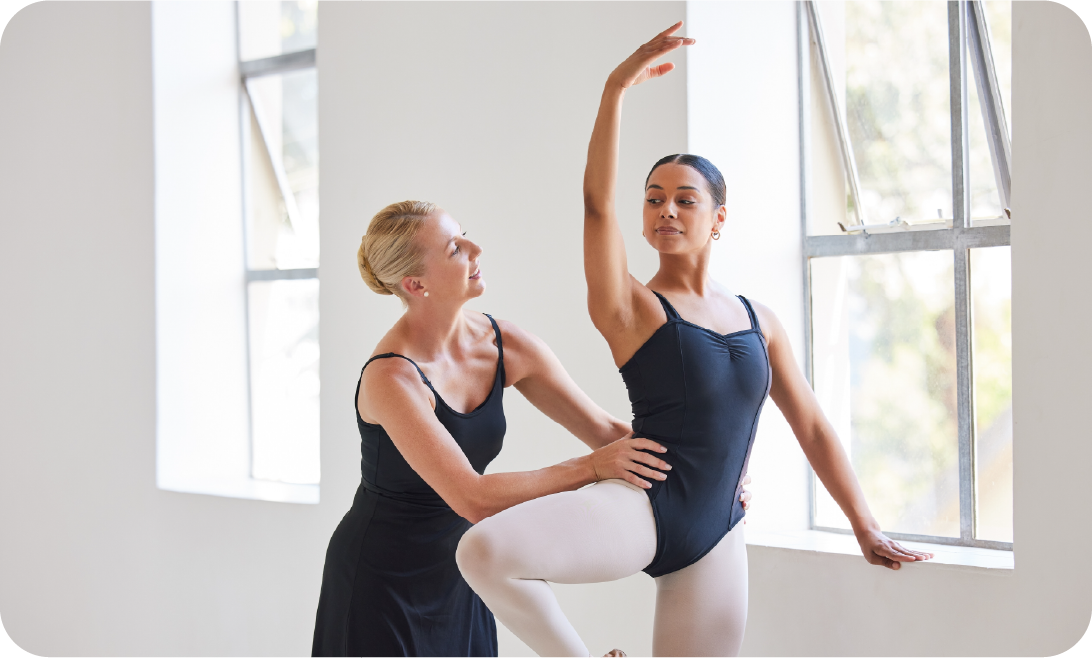
We know that dance requires a large amount of physical capability and to succeed professionally, a strong mind. Yet, many dancers sacrifice their physical or mental well-being in the pursuit of their dreams. I know because I was one of those dancers and was surrounded by many like me. How then, can we as educators, friends and art lovers ensure that health is prioritised in the dance industry?
1. Structured Training
Pushing to extremes does generate results but pushing to extremes without rest or recovery will only lead to burnout. Dancers should follow a sustainable training program that aims to strengthen their bodies and enrich their minds, taking them step by step through the fundamentals before advancing to more technical movements. This structured and methodical approach will not only help to boost the dancer’s confidence and self-efficacy but also dramatically reduce the risk of injury, ensuring that new load is added only when the dancer is capable of enduring it.
2. Proper Nutrition
Pursuing unsustainable beauty standards, some dancers may choose to sacrifice one important pillar of health: nutrition. It is important to recognise that under-eating can take on multiple forms with some dancers choosing to abstain from eating completely and others choosing only to ‘eat clean’. While the latter is more palatable to onlookers, the results can be similarly devastating when malnutrition disguises itself as colorful salads and nut butters. Dancers should be educated not only on the importance of nourishing their bodies but on the dangers of not.
3. Complementary Training
To ensure optimal physical health, dancers should follow a complementary training routine that enhances their performance without exhausting their bodies. Any training outside the studio should aim to address imbalances and weaknesses in their current routine be it strength, mobility, or stamina. This training program should be sport-specific and serve to better the dancer’s performance capacity without overloading the body.
4. Mindful Training
As discussed, health concerns both mental and physical wellbeing and it is my belief that a dancer’s training should reflect that, incorporating activities that help to boost their body as well as their mind. By encouraging a deeper awareness of the body through concentrated, focused work, dancers can unlock a greater understanding of how to move efficiently and safely.
Train for Your Health with PBT
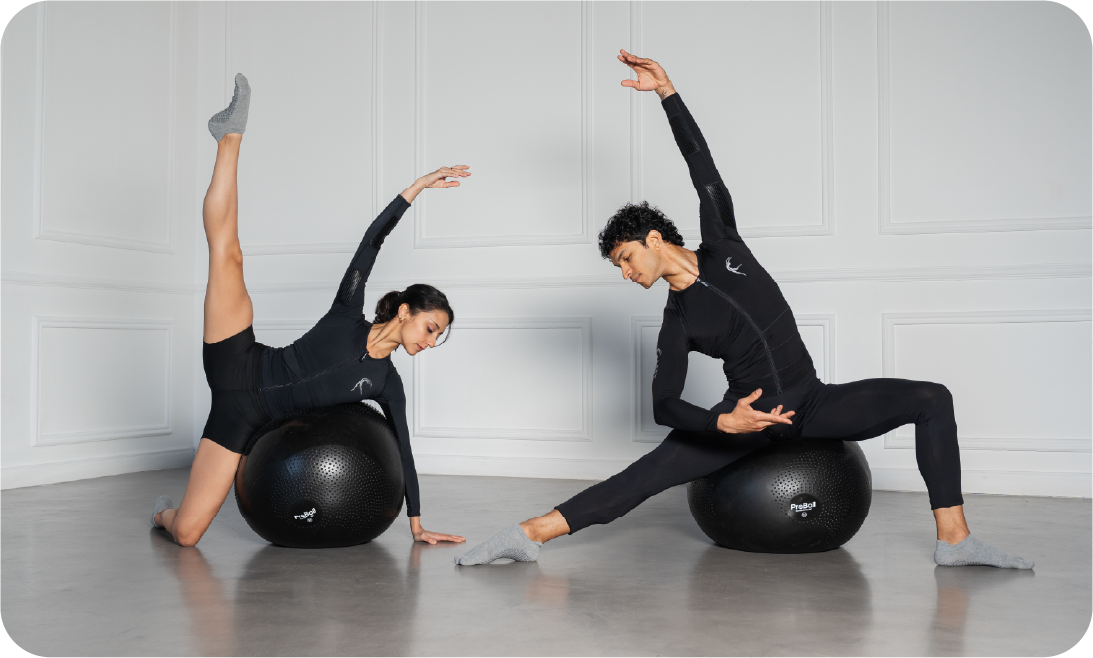
With a mission to nurture a generation of healthy dancers, PBT (Progressing Ballet Technique) has created a program that addresses the gaps in traditional training, providing dancers with the tools they need to significantly improve their performance. Each class has been designed with care and precision, ensuring that dancers are led methodically through each movement sequence safely and intentionally.
This is not just another promise, another miracle product or 8 week plan. No, this is a dancer-specific, human-led program expertly crafted to meet dancers where they are and get them to where they want to be.
When I was injured during my career, PBT played a crucial role in getting me back to dance both physically and mentally. The structured, progressive approach helped renew my self-confidence, giving me the strength and assurance I needed to progress. At first, I was skeptical, viewing the use of equipment as gimmicky but I soon saw and experienced the value of their training first hand. Since returning to dance as an educator myself, my appreciation for the platform has grown tenfold. PBT prioritises health, wellness, and clarity. It is an organisation that is concerned with doing good not looking good, a quality I believe has been neglected by too many in the dance industry.
Unlock your Potential with PBT
Now, with the release of their new app, structured training programs, targeted technique classes and flexibility tutorials can be accessed from anywhere at any time. Between rehearsals, learn to strengthen the posterior chain to support pirouettes. Before class, work on activating the hamstrings and glutes to enhance your jumps or after a show/exam, wind down with a PBT recovery class designed to reset and restore the body after a long day of dancing. If you are brand new to dance, try one of our junior level classes aimed at establishing the foundations of pure classical technique or if you are injured and returning to dance, why not start slowly with a mobility session.
At PBT, we are not focused only on short-term wins but long-term success in whatever shape that means for you. Maybe your goal is simply to deepen your connection with your body, maybe you want to be more mobile, maybe you are trying to improve your control in adage. Whatever it is, PBT’s expert team has you covered. Sign up today and discover your potential.
By Elise Smith
Sign up to our newsletter
Receive tips, news, and advice.